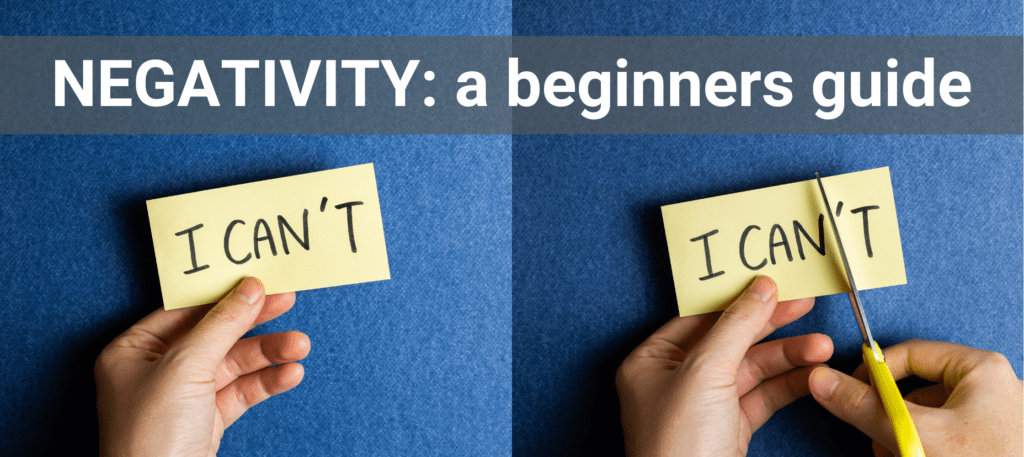
Negativity is a common part of the human experience, one which we all experience.
It was a useful survival tool in the days of predators, but now we live in a different world.
A complicated world where we’re lost, negative, and struggle with life and its complexities.
Here we explore negativity – to understand it, to be more positive, happier and have a better quality of life.
What is negativity?
Negativity is a state of mind or attitude, it’s associated with being pessimistic or critical.
But most often it’s having a negative outlook on situations, events, people, or life in general.
We all experience the world differently so negativity is a unique experience. Consequently, most people experience occasional negativity but others experience chronic negativity.
All of us cope with life differently and our mindset determines how we react to events. For example, if two people were made redundant, one of them could have a positive outlook – seeing it as an opportunity for change and adventure. Whereas the other may focus on the negatives of the situation – financial insecurity, failure and forced change.
Which could negatively impact their quality of life – their mental health, relationships and physical health. But how can we tell if we or others are in a negative state of mind?
What are the signs of a negative person?
Here are some of the signs, behaviours and attitudes of people with a negative mindset:
Complaining – frequent and constant.
Blaming – blaming other or the world, not taking responsibility.
Criticism – critical of others or of themselves.
Pessimism – seeing the worst in things, people, and the world in general.
Resisting change – avoid new situations and fear change.
Self-doubt – low self-esteem and doubting their own abilities.
This is only a few of the signs of a negative mindset, can you identify them in yourself or others?
If you see them in yourself, there are things that you can do to become more positive. Take the time to identify the signs that you are in a negative state of mind.
Top tip: make a record of the negative thoughts, actions and other sign that you see in yourself.
This will help you identify if your negativity is occasional or frequent (chronic)?
What is the difference between occasional and chronic negativity?
There’s a significant different between occasional and chronic negativity, they both impact on your quality of life, but to different degrees.
As a natural part of being human occasional negativity is acceptable, but chronic negativity should be tackled head on, the main differences between the two are:
Occasional negativity:
- It’s a normal part of life
- Everyone has periods of negativity
- Often triggered by a specific thing – bad day at work, traffic…
- Temporary – resolved with self-reflection or the passing of time
- Does not indicate a serious psychological issue
- A short-term discomfort, no impact on long-term physical health
Chronic negativity:
- Long-term negative thoughts and behaviour
- Not a normal part of being human
- Persistent negative thinking and attitude
- Can require and benefit from therapy or counselling
- Often no clear or immediate trigger
- Significantly impacts quality of life
- Impacts negatively on relationships
- Can be indicative of underlying mental health issues
What makes us negative?
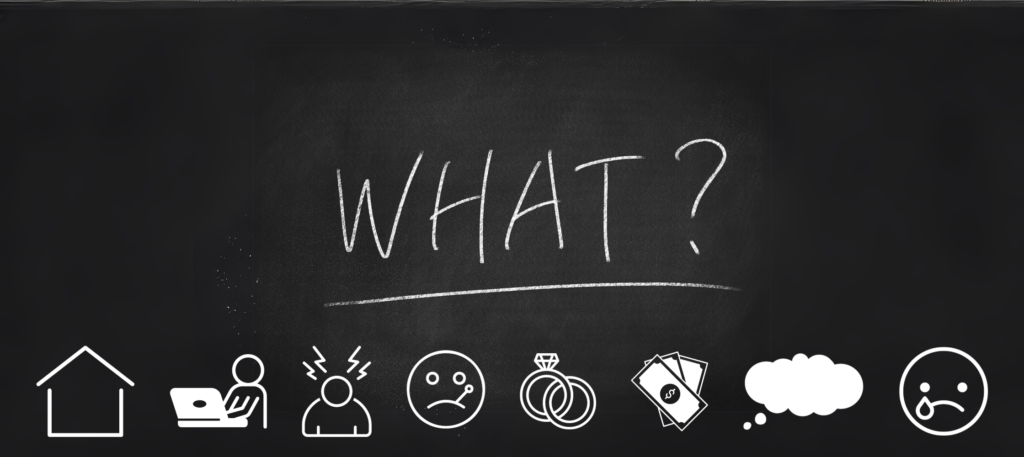
The world we live in is a complicated place, events, people and our inner mental world all combine to make us feel a certain way. Negativity bias and negative thoughts are psychological phenomena which contribute to our outlook on life.
Negativity bias
This is our brains tendency to focus on the negative – for example we may neglect lots of praise but focus on one critical comment. We remember these comments more readily than positive comments, you could get a hundred compliments, but you’ll more readily remember one insult
We have a tendency to over exaggerate negative events, react more strongly to them and we think about negative things more often than positive things. For example, if you did something silly years ago which you felt ashamed of you remember it vividly, it takes up more mental space than positive things.
It’s an evolutionary survival strategy, paying attention to bad things may save your life, being attuned to negative events is a way the brain keeps us safe. By understanding negativity bias you give yourself the knowledge to better cope with life.
Negative thought patterns
We often have thoughts that are negative and not based on fact, these are called cognitive distortion. This is your mind convincing you to believe negative things, that may not be true. They’re common and everybody experiences them, but they can lead to mental health issues.
By identifying these patterns through knowledge and self-reflection you can reframe them and change your mood – negative to positive. Here are three common cognitive distortions:
Discounting the positive – this is essentially doing something positive and being recognised for it then disregarding the compliment. Coming up with some reason why the compliment isn’t deserved.
Catastrophising – jumping to the worst conclusion, a partner who is late to arrive home had an accident.
It’s exaggerating the small problems, and convincing yourself that they’re serious.
All-or-nothing thinking – or black and white thinking with no shades of grey, no middle ground, things are either good or bad.
Thinking as something that isn’t perfect as a failure or labelling people as good or bad. For example: you make a driving error, you see yourself as a terrible driver, not someone who made a one off mistake.
Negativity bias and cognitive distortions contribute to making us feel bad, having a poor outlook on life. They’re not solely responsible for our negativity, other contributors include:
Past Experiences
The things we experience in life impact on us and make us who we are. Whether the experiences are positive or negative.
The negative experiences have more of an impact on us, which can be detrimental to how we feel.
Those who experience serious traumatic like physical abuse or childhood neglect will often have serious trauma which affects them for the rest of their lives.
Physical illness
As imagined this naturally leads to negativity, whether it’s the anticipation of an illness getting worse or not feeling well.
There are several ways in which physical illness can cause or contribute to negativity, including pain or discomfort, fatigue, loss of independence and financial uncertainty.
Big life changes
A new job or moving house can be exciting but ultimately lead to negativity, the reasons for this can include:
Leaving our comfort zone – feelings of nostalgia, sadness of moving on, and missing the life you had.
Relationship strain – any big change has an impact on relationships, whether its moving to a different country or the strain of moving house with your partner.
Some negative life changes will clearly trigger negativity, divorce, flood or job loss.
Stress and overwhelm
Stress can be positive, it motivates us and gives us the energy to progress and develop. However, after a point it impacts on our health and leads to negativity.
Excessive stress and overwhelm impacts on emotional and physical health, relationships and the rest of your life.
External influences
Factors outside of our control can cause negativity, such as work, relationships, and media.
The 24/7 exposure to news has been shown to have a negative impact on us, the stories that dominate the news channels are war, death, and other topics involving doom and gloom.
The way we deal and interpret external influences determines how we react – positively or negatively? We can change the way we react by changing our mindset.
What is the impact of negativity on our lives?
Physical Health Consequences
Our stress levels
Negative emotions can lead to increased stress levels, resulting in a range of health issues, including high blood pressure and heart disease.
Immune system compromise
Negativity can weaken the immune system, there’s a well established link between mood and the immune system.
The immune system when impacted by bad mood for long periods will result in being more susceptible to illness.
Unhealthy coping mechanisms
We may resort to unhealthy ways to cope: overeating, alcohol consumption, or a sedentary lifestyle.
Coping mechanisms which involve excessive consumption of sugar or alcohol impact negatively on physical and mental health – further contributing to poor mood.
Poor quality sleep
Negativity can disrupt sleep patterns. Sleep is crucial for our health, a host of health problems, including obesity, cardiovascular issues, and cognitive impairment.
Our mental health
Negativity can impact on existing mental health issues and make them worse. Being continuously negative can lead to anxiety, depression, and low self-esteem.
These can then lead to socially isolating yourself, damaging relationships and creating a cycle of negativity and self-destruction.
Negativity can have a terrible impact on your physical and mental health. Which can ruin personal and work relationships and your overall quality of life.
How to stop feeling so negative?
Negativity becomes a habit, which makes us poorly and sad. However, in comparison being positive benefits us, we maintain balance and have a good quality of life.
Here are useful methods to achieve this:
Meditation to diminish negativity
This is a method to help calm yourself, to rid yourself of the stresses and negativity you have.
Simply sitting in a quiet room without distractions and focussing your attention on for example your breath has psychological benefits.
There are many types of meditation to best suit your lifestyle and preference, The benefits a numerous.
Positive affirmations to offset negative thoughts
A phrase that we say to ourselves to shift how we feel, a mindset shift. They’ve been shown to be useful for overcoming negative thoughts.
Using them to offset negative thoughts, for example, if you mess up at something rather than thinking “I am useless”, vocalise “I am capable”.
This will help reduce the impact of negative thoughts and overtime becomes automatic.
Lifestyle changes
Feeling down can be a result of your lifestyle, what you do, eat and the way you live. Improve your lifestyle to feel better, this can include, eating a healthy diet, exercising, getting enough sleep, using your time wisely and living in a pleasant space.
Living in a messy, cluttered environment has been found to negatively impact mood. Declutter and make your space a nice place – it’ll lift your mood.
Diet can have a real impact on the way you feel, especially if it leads to weight gain and mental health issues. Consider reducing alcohol and sugar – see how you feel. However, if you have an alcohol addiction you may need the assistance of medical professionals.
Do things that are good for you
Engage in activities that make you feel good, avoid things that lead to negativity. Certain activates lead to a positive state of mind – walking in nature, spending time doing hobbies and exercise.
Consequently, spending time with negative people and excessive social media can cause you to feel less positive.
The habits that you have contribute to the way you feel, identify and get rid of bad habits whilst replacing them with good habits.
Know how to deal with negative people
We spend time around other people, family, work colleagues or in passing during day to day activities.
But some of the people we spend time with get us down. So, how we deal with negative people is an important skill to learn, identifying, dealing with, and avoiding negative people.
This skill will help us to remain in a positive state of mind and avoid negativity.
The power of self-reflection
Self-reflection is looking inward, identifying why we feel the way we do, having an awareness of negative thoughts can empower us.
This is a method to identify negative thought patterns, the first step to healing.
However, self-reflection has a dark side – negative self talk. So be aware and prevent self-reflection taking a negative turn.
Adopt the practice of gratitude
This practice helps us focus on the good things which exist in our lives.
Focus on the good things in life and be grateful for them. If you struggle, take a negative experience and see what positives you can identify in it – be inventive. For example: if your boss gives you negative feed back seek the positive in this, you are grateful for the chance for self-development, grateful that your boss is trying develop you.
Top Tip: Fill a journal with all the good things in your life, such as: being grateful for your loving partner, good health, easy access to food and available health care.
Is it time to seek professional help?
These techniques won’t help everybody. Sometimes professional help is required, how is your quality of life? Is it poor, filled with chronic negativity.
Seek professional help as soon as possible, for example: talk to your doctor, speak to a trained therapist or counsellor. There are helplines available with people who can listen and provide resources to help you.
Support can be provided by family, friends, peers or work colleagues. Talk to somebody, get help and improve your quality of life.
So, to summarise…
Negativity is a part of life, it’s unavoidable, we all tolerate it from time to time. However, when it transforms from occasional to chronic it’s detrimental to our well-being.
So, firstly, we have to recognise the signs of a negative mindset: complaining, blaming, criticism, pessimism, resistance to change, and self-doubt…
Secondly, we figure our what’s causing the negativity: our negative thought patterns, past experiences, physical illness, stress, external influences…
And, thirdly, we can combat our negativity, using methods that are a good fit for us. Including: meditation, positive affirmations, lifestyle changes, managing negative people, self-reflection, and challenging negative bias and negative thought patterns.
With this knowledge we can recognise, understand and reduce the likelihood of physical and mental health issues. However, if the negativity you live with is having an impact beyond what is normal, seek professional help.
There’s only so much control we have of our lives and the world around us, even our inner world disrupts our wellbeing. But we need as many tools at our disposal as we can possibly have – to get out of a negative state of mind.
So, being knowledgeable about negativity and having strategies to cope with it means we are empowered. Which gives us a better opportunity to enhance our quality of life.