The older I get the more routine and stability I create. Which has benefits, financial security and lower stress and strong relationships.
But it can be boring, repetitive, and lead to a life which feels stagnant.
Personal development and growth are essential, enabling us to live a life with purpose and meaning.
This contributes to our quality of life. Helping to boost our level of happiness.
The good news is, change doesn’t have to be drastic, hard or overwhelming. It just requires a little curiosity to try new things.
The following are 7 things I’ve developed into habits. They help me grow and to be engaged with life, rather than simply going along for the ride.
1. Give Yourself Something to Look Forward To
Remember when you were a kid and looked forward to Christmas, or a teen who had concert tickets.
The anticipation made life exciting, having something to look forward to.
In midlife, our level of excitement won’t be on par with when we were youngsters. But we can still look forward to something.
It helps when life is dull or a bit gloomy. It can shift us into a more positive mindset.
Examples:
- Book a day out
- Arrange a date night
- Start a 30-day challenge
- Visit your favourite place
We all enjoy different things, so this is a very personal choice. Something I look forward to is cycling somewhere I’ve not been before, I put it in my diary and plan a route.
I even have a bucket list, a list which motivates me and provides me with things I look forward to doing.
2. Stop Putting Stuff Off
In midlife we can feel stuck because we’re not progressing in life. As humans we want to feel as though we are changing for the better each day, and we often neglect the importance of positive change.
Putting off tasks can exasperate this feeling of stagnation. When we have a big to do list, we feel stuck. A feeling of regret that we’re not getting things done.
If we make this a habit, there is little progress or positive change. Change your day for the better by getting something done. Examples:
- Reply to a message
- Book that car service
- Make that appointment
- Declutter a drawer
The task can be small, what’s important is the momentum and feelings which result.
A feeling of relief and a sense of achievement when a task is completed. I’ve found that reluctantly completing 1 task can create momentum – resulting in more stuff getting done.
3. Mix Up Your Routine
Doing the same thing every day can make life feel dull.
Routines are useful, they streamline our day and make it more efficient. But they can stunt growth and any positive personal change.
Here are some examples of what I’m suggesting:
- Take a different route
- Change your morning routine
- Listen to a new podcast
- Visit a new place
My most recent routine change was listening to a new podcast. I tended to listen to the same podcast, which I’d got bored of them. I switched podcasts and opened up a whole new world of learning and interest.
4. Spend Less Time Doing Nothing
You know your time wasters, things you want to do less of. Mine are – too much TV viewing and too much phone scrolling.
During Covid-19 I did a lot of ‘doomscrolling‘, making an already unhealthy habit even unhealthier. The small daily change of knocking this on the head made me feel much better.
Both are addictive and once you start it’s hard to break away from them. How to recognise your time wasters?
Think through what your average day involves, highlight things you do which provide zero benefit. Be flexible though, for example TV viewing can be beneficial, a way to unwind and spend time with family.
Too much of something unproductive can also be a sign that you’re bored and simply filling time with mindless tasks.
Examples of how to do this:
- Leave your phone in another room
- Stop checking emails every 5 minutes
- Turn off notifications
- Replace scrolling with a walk
- Set a screen-time limit
5. Move More, Even Just a Little
Movement is good for us, sitting down for long periods can be unhealthy. It’s also bad for us mentally, a lack of movement can make us feel lazy and fatigued.
Which can be a viscous circle, the less we do the less we want to do. Physical movement can help change our mood for the better.
Compare sitting down to having a walk, which strikes you as being more productive. You don’t have to walk miles just be more physically active.
When I’m feeling lethargic, I’ll take the dog for a walk. But anything which doesn’t involve being static is movement.
Examples:
- Go for a short walk
- Stretch for five minutes
- Ride your bike
- Clean the house
6. Write Down What’s on Your Mind
A cluttered mind can cause overwhelm and procrastination. This is normal, as we have work, family, and multiple tasks occupying our mind.
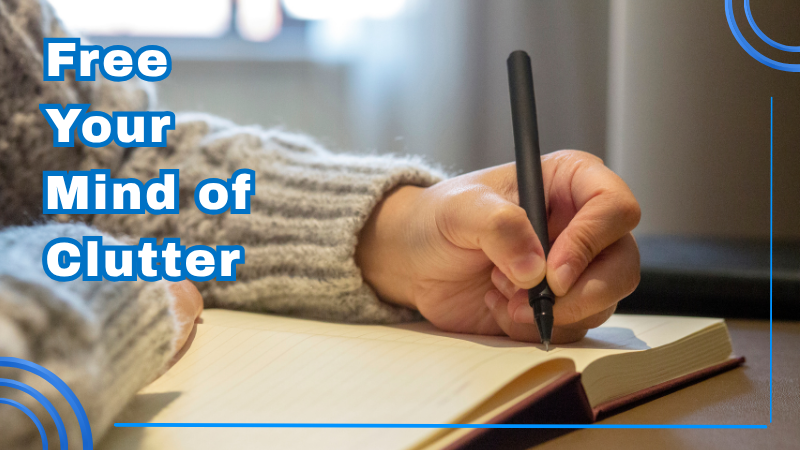
Grab a notepad to have a brain dump, simply write down everything that’s knocking about in your head. If I were to do this it would include things like, the dog needs a brush, is my work kit sorted, what date is my aunties birthday or why am I feeling stressed.
It’s amazing how many thoughts we have in a short space of time. Get them down on paper or put them in your phone – it releases mental clutter.
Your brain feels less cluttered; try to be proactive and get tasks done. Make this a habit and you’ll feel less stressed and mentally overwhelmed.
Examples:
- List what’s stressing you
- Make a note of what’s making you angry
- Note down the tasks you have
7. Improve One Area of Your Life
Make a small positive change. Small consistent positive changes build momentum and accumulate to benefit you more as a whole than individually.
This is building good habits, have a look at your notes from your brain dump. Is there anything you can work on now, or a small positive change you can build into your life.
An example could be: why do I feel tired all the time? After scrutiny you may conclude that your sleep is poor.
You identify that you don’t sleep enough hours, because you spend too long on your phone in bed. Swap the phone for a book to help create beneficial change.
Be curious, identify a problem and a small positive change you can make. Being inquisitive and open to change helps break bad habits and the feeling of being stuck in an unproductive cycle.
Small Changes Can Make Your Day Better…
We don’t have to feel like we’re stuck in midlife. Routine and comfort quietly turn into stagnation. A complete overhaul isn’t required, just small, intentional, consistent change.
Each of these changes is simple, like booking something to look forward to, ticking off one small task or moving your body.
Each change promotes momentum, altering how you feel about your day. This helps to replace boredom with purpose, frustration with progress, and passivity with action.
Midlife isn’t the end of growth; we just need conscious effort to work harder to grow.
So, I would start small. Stay consistent and be open minded to what can make today, better than yesterday, and tomorrow even better.