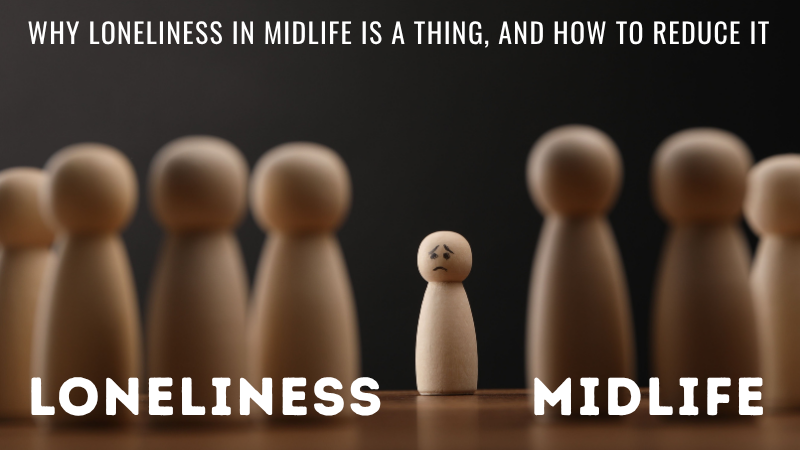
Loneliness may once have been associated with old age. But now it seems to impact every age group.
We seem to be more connected than ever through social media. But this newfound connection does not satisfy us, as much as meeting in person and spending quality time with someone.
Here we look at loneliness in midlife. How to recognise it in yourself and others, why it occurs and what we can do about it. But first…
What Is Loneliness?
Defining loneliness as being alone is misleading. We’ve all been alone at times but not felt lonely.
It’s more about social connections not being as meaningful as they were. Maybe we don’t meet people as frequently as we once did.
The invention of the mobile phone and social media has made it easy to stay in touch, but in a less satisfying way. It’s now common to have lots of ‘friends’ but no quality relationships.
Loneliness seems to be more about the quality of a relationship. The more effort you have to put into a relationship the more you seem to get back.
Convenience nowadays is a priority, but it’s unfulfilling. One size does not fit all either, I used to feel lonely when I lived alone in midlife, but I have a friend who loves living alone. So, it’s a very personal experience.
What Are the Signs of Loneliness?
There are many signs, we know when we’re feeling lonely. But it’s harder to spot it in others, unless they say they’re lonely. Here are some signs:
- Being disconnected from the community
- Isolating oneself from relatives and friends
- Feeling down after big life changes, e.g. kids move out or separation
- Not having anybody to go to in an emergency
- An obsession and preoccupation with social media. I used to do this, trawling social media for hours
Why Does Loneliness Happen in Midlife?
I know why it happened to me. I’ve never really enjoyed my own company, and a relationship breakdown led to me living on my own.
A time when other may thrive, I found it isolating. To be in a family and then suddenly on my own was a shock.
It’s clear that there are numerous reasons why loneliness happens in midlife. But common reasons include:
- The natural fading of friendships when starting a family or other life commitments.
- Social opportunities become harder and less frequent. When we were young, it was normal to be out all day mixing with other people. But as you age, these opportunities become scarcer, people have more commitments and less free time.
- Careers distribute friends to other parts of the world. I’ve moved many times for my career, leading relationships to fade
- Pride can stop us speaking out about being lonely. This is exacerbated if you have no close relationships. My generation are certainly a generation who just get on with it, which can cause regrets.
What Can Be Done About Loneliness in Midlife?
Thankfully, a lot, but it does require sacrifice. But one that’s worth it, such as swallowing your pride, stepping out of your comfort zone, time and effort, and feeling uncomfortable.
All of these things are challenging but leave no lasting harm and can help us grow and develop to become happier and more rounded.
So how can we do this, to put an end to loneliness? Here are a number of suggestions:
Reconnect with friends, reach out and arrange to meet up. Do not just ignite a relationship at a distance via social media.
Commit to nurturing current relationships. Arrange a weekly coffee meet.
- Start a conversation. I go to a local community gym, and you would be amazed how long you can end up chatting to someone. I got my ear talked off by a 70-year-old man telling me about how he’d been playing 5-a-side football at the gym hall. It was a great chat, and whenever we would pass, we would have a chat.
- Consider an invitation in a positive light. Often, if you say no to an invitation enough times, you don’t get invited. Say yes more and try to build or rebuild relationships.
- Join a club. I remember when I was a kid, my elderly neighbour lost her husband. After a period of mourning, she embraced this new life and joined loads of clubs, made loads of friends and was always on the go. This is perfect for men in midlife. I joined a running club, and it gave me the opportunity to get out and meet people, without any stigma attached to it. Reduce the time you spend on social media, strive to make online friends, face-to-face friends. Many people are in the same situation as you.
- Find something to challenge you. I entered a half Ironman, a great way to meet new people and build relationships.
- Nurture family relationships. Because we’re all so busy and preoccupied, try to engineer time and events to build better family relationships. Seek common ground. Spend more time strengthening existing relationships with family members.
- Reflect on your work life. Consider whether work has become your only source of social interaction and look for opportunities outside of it.
- Be open about how you’re feeling with someone you trust or consider speaking to a therapist.
Make the effort to identify what you can do to reduce loneliness and embrace change and challenges.
It can only lead to a better, happier life. Nurturing meaningful relationships improves wellbeing and satisfaction in life.
Reducing loneliness can be a quantitative game to begin with, but it will lead to some quality relationships, which will last a lifetime. Loneliness in midlife does not have to be a permanent state of being.
Conclusion to Loneliness in Midlife…
If you feel like things don’t feel right and you identify that loneliness is the issue, remember there are things you can do.
It takes effort and time, but it’s worth it. Nothing is wrong with you. We are a social species, and our social world has evolved in a different direction than our evolution intended.
Lots of people in midlife experience loneliness. I have, and you probably have or will experience it.
Quality connections are what you need to seek. Achieve this, and you’ll understand how beneficial these connections are.
Challenge yourself, arrange a meeting with a long-lost friend, join a club or arrange a coffee meetup with a family member or colleague.